



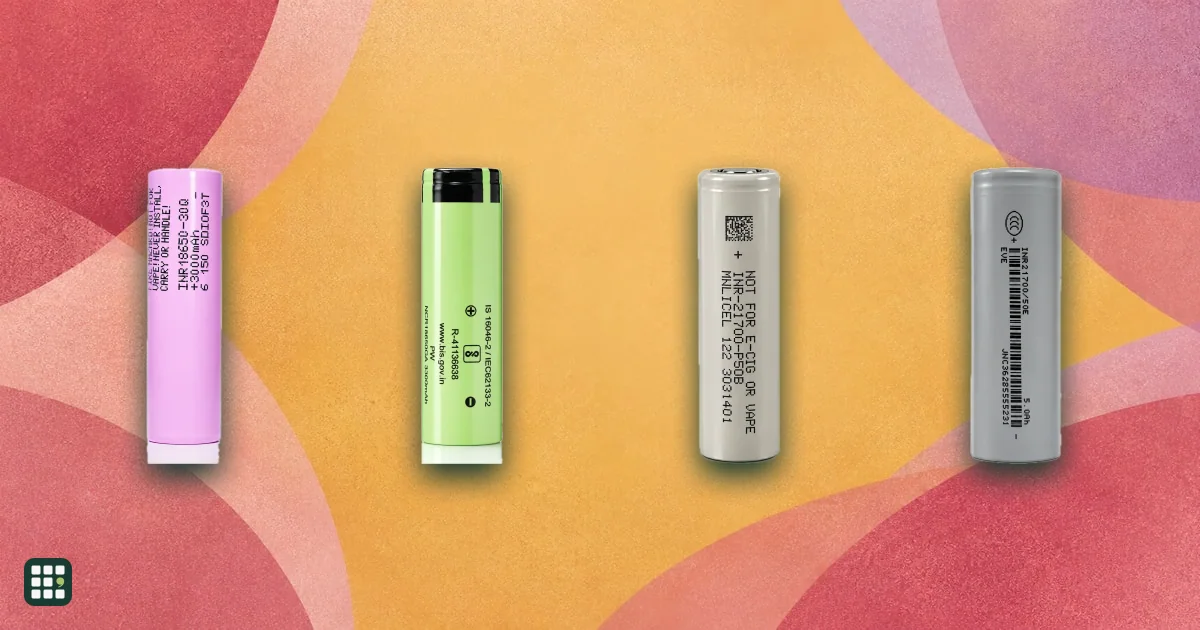
18650 and 21700 cells for long-endurance drones
Individual 18650 and 21700 lithium-ion cells are the usual choice for a homebuilt, long-endurance quadcopter or fixed-wing pack: cheap, light and easy to hold in a 3D-printed frame. This grid compares twenty cells on what decides flight time (guaranteed capacity, energy per gram, weight) and on whether they can feed a hover (continuous current, internal resistance, cold limit). Figures come from the makers' own data sheets as quoted by the retailer or the maker, and we flag draft specs and cells you cannot actually buy.
Last updated
How to choose
Flight time comes down to energy in the pack divided by the power the aircraft draws, and the cells are most of an endurance build's weight. So the number to chase is energy per gram, not headline milliamp-hours.
1. Start with Specific energy and Minimum energy
- Specific energy (Wh per kg, computed here from each maker's guaranteed minimum capacity and printed weight) shows how much flight you get per gram of cell. Cells at the top give the longest flights for the same weight.
- Minimum capacity is the number you can plan on. The typical capacity on a retailer listing runs a few percent higher.
- Pack energy is simply cells in parallel times series count times one cell's minimum energy. Four Molicel M65A cells, for example, hold about 92 Wh at the minimum and weigh about 300 g at the printed maximum, before holders, wiring and protection.
2. Check the hover current against the rating
- A hovering quad typically draws only a few amps per cell, but climbs, gusts and punch-outs draw several times that. Check Maximum continuous discharge and Rated for 10 A continuous against your motors, and add cells in parallel to reduce sag.
- Lower AC internal resistance means less voltage sag and heat, which matters late in the flight when the pack is low. Makers print either a maximum or a typical value, so compare within a basis.
- Cold air cuts capacity. If you fly in cold weather, check the Lowest discharge temperature and keep packs warm until launch.
3. Pick the format for your frame
- 21700 cells hold more energy per cell and are slightly more efficient per gram than the older 18650s, but each weighs about 70 g against about 48 g.
- Use Cell diameter and Cell length (maximums including the wrap) to size a 3D-printed holder with a little clearance.
4. Read the fine print
- Datasheet status: several Samsung and Sony/Murata sheets are marked tentative or draft. The figures may change.
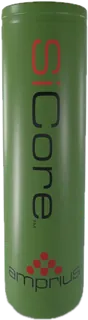
- The Amprius silicon-anode cells (SA110, SA112, SA117) lead on paper but are sold to businesses by quote, not as single cells to hobbyists. The Molicel M65A is the best energy per gram you can buy as a single cell, but it was sold out at the retailer when we checked.
- Prices are single-cell list prices at one US specialist retailer. Stock changes, so confirm before you design around a cell.
5. Safety and authenticity
- These are unprotected cells intended for packs built with a battery management system, a fuse, and spot-welded nickel strip. Do not solder directly to cells, and never mix cells of different models or ages.
- Fake and rewrapped cells are common on marketplaces. Buy from the maker or an authorized seller, and weigh a sample cell against the printed weight.
- Never carry loose cells in a pocket or bag, and charge only with a lithium-ion charger set to 4.20 V per cell.
This grid compares cells only. Capacity and weight figures are the makers' specifications, not our own tests, and real endurance depends on your aircraft's weight, propellers and motors.
Answer
Browse the table. Filter to what matters.
Use the filters below, then sign in if you want to shortlist and decide with friends.
Sign in to vote, hide products and features, and reorder.
Verified: hover a cell and click its green dot for the source Estimate: no cited source Not stated: the maker doesn't publish it
| Feature | ⠿ | ⠿ | ⠿ | ⠿ | ⠿ | ⠿ | ⠿ | ⠿ | ⠿ | ⠿ | ⠿ | ⠿ | ⠿ | ⠿ | ⠿ | ⠿ | ⠿ | ⠿ | ⠿ | ⠿ |
|---|---|---|---|---|---|---|---|---|---|---|---|---|---|---|---|---|---|---|---|---|
|
⠿
Price
|
||||||||||||||||||||
|
⠿
Cell format
|
||||||||||||||||||||
|
⠿
Minimum capacity
|
||||||||||||||||||||
|
⠿
Typical capacity
|
||||||||||||||||||||
|
⠿
Minimum energy
|
9 Wh
|
10.6 Wh
|
12.1 Wh
|
10.8 Wh
|
9.7 Wh
|
12.1 Wh
|
12.1 Wh
|
13.6 Wh
|
14.4 Wh
|
15.5 Wh
|
17.5 Wh
|
23 Wh
|
14.4 Wh
|
15.8 Wh
|
17.8 Wh
|
17.3 Wh
|
19.4 Wh
|
17.9 Wh
|
20.8 Wh
|
22 Wh
|
|
⠿
Cell weight
|
||||||||||||||||||||
|
⠿
Specific energy
|
200 Wh/kg
|
221 Wh/kg
|
242 Wh/kg
|
232 Wh/kg
|
202 Wh/kg
|
252 Wh/kg
|
244 Wh/kg
|
283 Wh/kg
|
206 Wh/kg
|
221 Wh/kg
|
246 Wh/kg
|
309 Wh/kg
|
206 Wh/kg
|
219 Wh/kg
|
256 Wh/kg
|
240 Wh/kg
|
262 Wh/kg
|
259 Wh/kg
|
289 Wh/kg
|
306 Wh/kg
|
|
⠿
Cost per Wh
|
$0.55/Wh
|
$0.66/Wh
|
$0.58/Wh
|
$0.74/Wh
|
$0.62/Wh
|
$0.66/Wh
|
$0.58/Wh
|
$0.49/Wh
|
$0.64/Wh
|
$0.69/Wh
|
$0.52/Wh
|
$0.49/Wh
|
$0.51/Wh
|
$0.39/Wh
|
$0.58/Wh
|
$0.36/Wh
|
$0.33/Wh
|
|||
|
⠿
Maximum continuous discharge
|
10.7 A, 2C
|
|||||||||||||||||||
|
⠿
Rated for 10 A continuous
|
||||||||||||||||||||
|
⠿
AC internal resistance
|
||||||||||||||||||||
|
⠿
Lowest discharge temperature
|
||||||||||||||||||||
|
⠿
Cell diameter
|
18.5 mm
|
21.25 mm
|
21.85 mm
|
21.7 mm
|
||||||||||||||||
|
⠿
Cell length
|
65.2 mm
|
70.3 mm
|
71.15 mm
|
71 mm
|
||||||||||||||||
|
⠿
Datasheet status
|
Maker data sheet, catalog Q4 2026
|
Maker data sheet, catalog Q4 2026
|
Maker data sheet, catalog Q4 2026
|
|||||||||||||||||
|
⠿
Sold as single cells to US buyers
|
|
|
|
Why these features matter
-
Price ($)
Cells are a small part of a build, so price rarely decides the choice. Per-watt-hour cost (below) is more useful.
-
Cell format
21700 cells hold about 40 to 90 percent more energy per cell and weigh about 50 percent more; 18650 cells fit smaller printed frames and holders.
-
Minimum capacity (mAh)
The number you can plan on. Headline capacities on retailer listings are often the higher typical figure.
-
Typical capacity (mAh)
The figure shoppers see in the name (3,500 mAh, 5,000 mAh). It runs a few percent above the minimum.
-
Minimum energy (Wh)
Energy is what sets flight time. This is the conservative figure to use when sizing a pack.
-
Cell weight (g)
Every gram of cell is a gram the motors must lift, so weight matters as much as energy.
-
Specific energy (Wh/kg)
The single best number for endurance: energy carried per gram of cell. Higher means more flight time at the same weight.
-
Cost per Wh ($/Wh)
Shows what each hour of flight costs in cells, and how much you pay for extra energy per gram.
-
Maximum continuous discharge (A)
A quad hovers at roughly 3 to 10 A per cell, so even modest ratings work. Higher ratings mean less voltage sag in punchy flying.
-
Rated for 10 A continuous
A rough hover budget for a heavy single-cell or two-cell quad. Cells below 10 A need more cells in parallel to keep sag and heat down.
-
AC internal resistance (mΩ)
Lower resistance means less voltage sag and heat at the same current, which keeps a pack steady late in the flight.
-
Lowest discharge temperature (°C)
Cold air cuts a lithium cell capacity sharply. A lower limit suits flights in cold weather.
-
Cell diameter (mm)
Sets the inner size of a printed cell holder; a tight holder needs the true maximum.
-
Cell length (mm)
Sets the length of a printed cell holder and the minimum frame size.
-
Datasheet status
Draft and tentative specs can change, and the figures may differ from the cells you receive.
-
Sold as single cells to US buyers
A great-looking cell you cannot buy as a single cell does not help a hobbyist. Buy from authorized sellers: fakes are common.
About the products
-
Samsung 25R · Samsung SDI
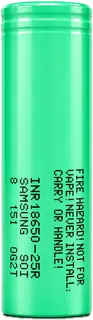
A long-running, inexpensive 18650 power cell rated for 20 A. It carries less energy than the 3,000 mAh and 3,500 mAh cells, so it suits a short-endurance or high-current build rather than a long-endurance one.
-
Samsung 30Q · Samsung SDI
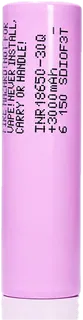
A widely sold 3,000 mAh 18650 with a 15 A continuous rating and a published, final spec. A solid, easy-to-find choice when you want some current headroom; it holds less energy per gram than the newer high-energy cells.
-
Samsung 35E · Samsung SDI
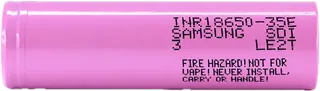
The classic high-capacity 18650, known as a 3,500 mAh cell. Its 8 A rating is below a 10 A hover budget, so it only suits low-current builds, and its published spec is marked tentative.
-
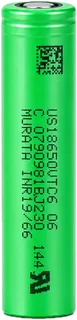
Murata VTC6 · Murata
Formerly sold as the Sony VTC6, now made by Murata. A light 18650 with a 15 A rating and low internal resistance, popular in drone packs; it holds less energy than the 3,500 mAh class.
-
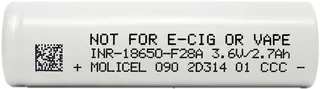
Molicel P28A · Molicel
A 35 A high-power 18650 with very good cold-weather performance. It carries less energy than the 3,500 mAh cells, so it is a power cell first and an endurance cell second.
-
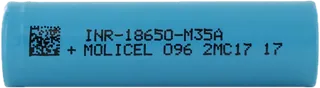
Molicel M35A · Molicel
A 3,500 mAh class 18650 with a 10 A rating, one of the best energy-per-gram 18650s you can buy as a single cell in the US. Was sold out at the retailer when checked.
-
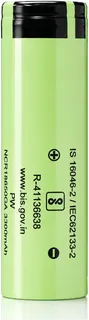
Panasonic NCR18650GA · Panasonic
A 3,450 mAh 18650 with a 10 A continuous rating, long used in e-bike and drone packs. A dependable energy-per-gram pick that is easy to buy from authorized sellers.
-
Amprius SA110 · Amprius
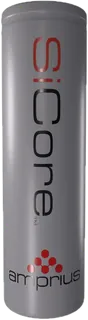
A silicon-anode 18650 with 4,000 mAh typical capacity at about 48 g, the highest energy per gram of any 18650 here. Amprius sells to makers and by quote; single cells are not on sale to US hobbyists.
-
Molicel P42A · Molicel
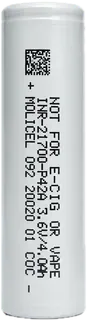
A 45 A, 4,200 mAh 21700 power cell with very low internal resistance. Excellent for punchy builds, but more current capability than a hover-only quad needs. Was sold out at the retailer when checked.
-
Molicel P45B · Molicel
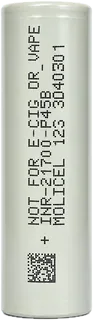
A 4,500 mAh, 45 A 21700 that adds capacity to the P42A at the same size and weight. A strong all-rounder when you want both energy and current headroom. Was sold out at the retailer when checked.
-
Molicel P50B · Molicel
A 5,000 mAh, 60 A 21700 that is easy to find from US sellers, including drone retailers. A good all-round pick for a quad that needs both capacity and current headroom.
-
Molicel M65A · Molicel
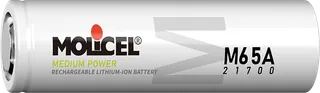
A 6,500 mAh high-energy 21700 with a 26 A rating and about 322 Wh/kg stated by Molicel, the best energy per gram of any cell here that a US hobbyist can buy. Supply is tight: it was sold out at the retailer when checked.
-
Samsung 40T · Samsung SDI
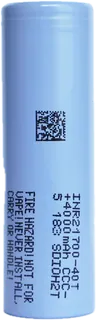
A 35 A, 4,000 mAh 21700 power cell. Strong for current, but less energy per gram than the high-energy 21700s. Its spec is marked tentative, and it was sold out at the retailer when checked.
-
Samsung 45T · Samsung SDI
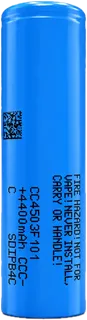
A newer 4,500 mAh, 35 A 21700 power cell. Its published spec is still marked draft, so treat the figures as provisional.
-
Samsung 50E · Samsung SDI
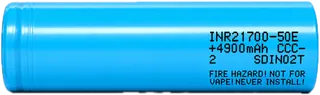
The standard 5,000 mAh 21700, easy to buy and cheap. Its 9.8 A continuous rating is a little under a 10 A hover budget, so it is best in low-current builds with several cells in parallel.
-
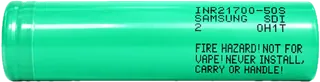
Samsung 50S · Samsung SDI
A 5,000 mAh 21700 with a 25 A rating and a final, published spec. A balanced choice that costs more than the 50E and adds current headroom.
-
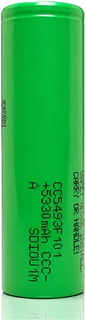
Samsung 58E · Samsung SDI
A high-energy 21700 with a minimum capacity of 5,330 mAh and a 2C (about 10.7 A) rating. A good endurance cell at low cost, but its spec is marked draft and it was sold out at the retailer when checked.
-
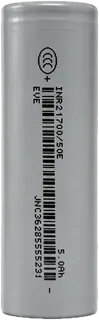
EVE 50E · EVE Energy
A 5,000 mAh, 15 A 21700 from a large Chinese maker, and the cheapest 5,000 mAh cell here. Less proven than the Samsung and Molicel cells, so buy only from an authorized seller.
-
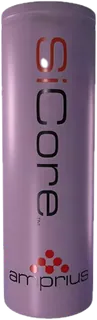
Amprius SA117 · Amprius
A silicon-anode 21700 with 6,000 mAh typical capacity. Amprius sells to makers and by quote; single cells are not on sale to US hobbyists.
-
Amprius SA112 · Amprius
A silicon-anode 21700 with 6,500 mAh typical capacity at about 72 g, the highest energy per gram in the grid on paper. Amprius sells to makers and by quote; single cells are not on sale to US hobbyists.
Suggest a change
Related comparisons
-
 3D-printable long-endurance quadcopters (18650 and 21700)
Printable quadcopter frames that run on single Li-ion cells fly far longer than the same size of drone on a LiPo, but the real decision is size, cell format and how many cells. This grid compares fourteen published designs and builds, from a 3 inch single 18650 to a 4S 21700 4 inch frame, with two non-printed benchmarks (a one-hour ArduPilot quad and a 34-minute single-cell quad), on flight time and how it was measured, weight, cells, print difficulty, GPS and phone-link support, and an estimated box footprint. It is honest about the gaps: almost no design documents a phone link, and most flight times are the designer's own claim.
-
 Sub-250g camera drones
Camera drones under 250 grams are the easiest way for a hobbyist to start flying. In the US, a drone under 250 g flown for fun needs no FAA registration, and most fold small enough for a jacket pocket. This grid compares 17 of them, from DJI Mini, Flip and Neo to Potensic ATOM, Holy Stone, HOVERAir self-flying cameras, the Antigravity A1 360 drone and the retired Autel EVO Nano+, on camera quality, flight time, obstacle sensing, range, how you control them and, since the FCC's December 2025 Covered List change, whether you can still buy them new in the US. The trade-off is simple: the lightest drones fly shorter and handle wind worse, and the best cameras are the hardest to buy.
-
 Beginner FPV drone kits
A ready-to-fly FPV kit puts a drone, goggles and a radio in one box, so a first-time pilot can fly the same day. This grid compares beginner kits from BetaFPV, EMAX, GEPRC, HGLRC and DJI: analog whoops from about $120 to $360, an HDZero digital kit at $525, and three DJI digital combos at $599, $979 and $1,019. The real trade-offs are price against flight time, brushless power against forgiveness, open standards (ExpressLRS, Betaflight, analog goggles) against a polished closed system, and what the box leaves out, such as spare batteries, a charger or radio batteries.
-
 FPV radio transmitters
The transmitter is the one piece of FPV gear you keep through every drone you own. This grid compares the radios hobbyists actually buy, from the cheapest pocket radios to full-size touchscreen radios: link (ExpressLRS, Crossfire, Tracer), firmware (EdgeTX or fixed), size and weight, gimbals, screen, batteries, module bay and simulator support. The real trade-offs are size against comfort, open EdgeTX against simple fixed firmware, and how much range you need.
-
 Digital FPV video systems
Digital FPV replaced the fuzzy analog picture with HD video, but each system is its own ecosystem: goggles and air units from one brand do not work with another's. This grid compares the main systems as a pilot buys them, goggles plus air unit, from the cheap analog baseline up to DJI's flagship, so you can weigh price, latency, picture quality, weight, range and openness before committing.
-
 Grass seed
 comes as single species, regional blends, and seed-plus-fertilizer products, and the right one depends on your climate, how much sun the spot gets, and whether you are starting a new lawn, overseeding, or patching. This grid compares the main national brand lines and farm-direct mixes on grass type, shade and drought tolerance, germination time, seeding rate, price per pound, and whether fertilizer is included.